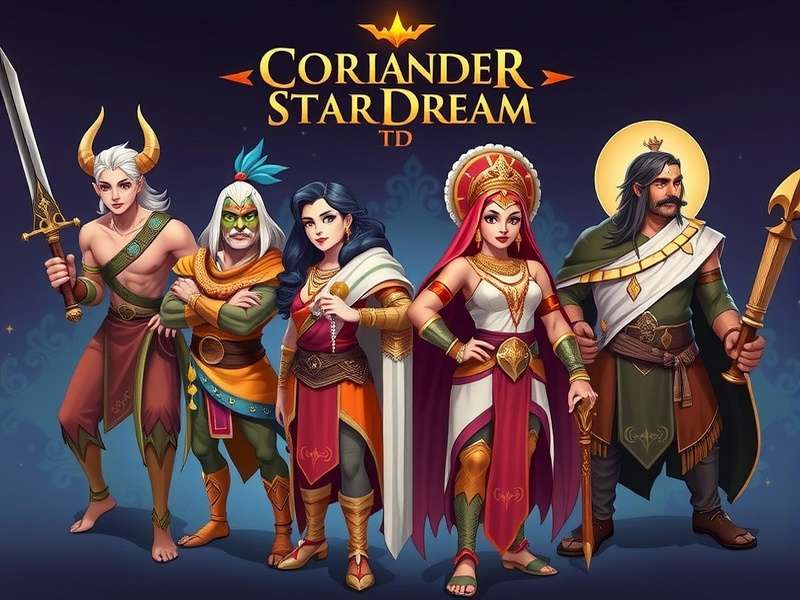
Coriander Star Dream has emerged as one of India's most beloved mobile games since its launch in 2022. Developed by Indian studio DreamWeave Interactive, this fantasy role-playing game (RPG) combines traditional Indian mythology with modern gaming mechanics to create an immersive experience that resonates deeply with Indian players while appealing to a global audience. With over 5 million downloads across India and growing, Coriander Star Dream represents the new wave of Indian-made games achieving international success.
Coriander Star Dream transports players to the mystical land of Arjuna, a world where ancient Indian deities walk among mortals and powerful artifacts hold the key to cosmic balance. The game's narrative draws heavily from Hindu mythology while weaving in original lore to create a fresh, engaging universe. Players assume the role of chosen warriors tasked with preventing the return of Asura Raj, a demon king seeking to plunge Arjuna into eternal darkness.
What sets Coriander Star Dream apart is its cultural authenticity. The developers worked closely with Hindu scholars to ensure accurate representation of mythological elements while adapting them for modern gaming audiences. From the architecture of ancient temples to the design of divine weapons, every aspect reflects India's rich cultural heritage.
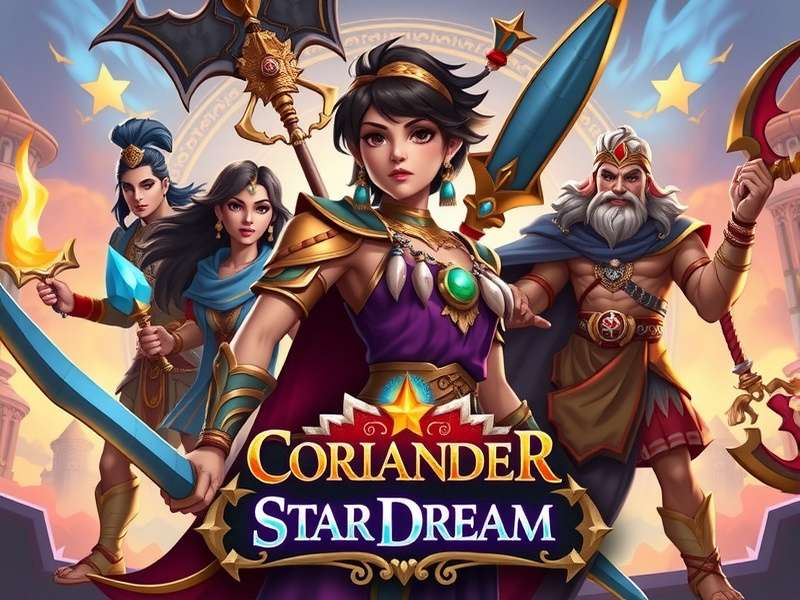
At its core, Coriander Star Dream follows classic RPG conventions while infusing them with Indian cultural elements. Players create their characters from one of six Varnas (classes) inspired by Hindu philosophy: Kshatriya (warrior), Brahmin (mage), Vaishya (merchant), Shudra (rogue), Deva (celestial), and Asura (shadow). Each Varna has distinct abilities and progression paths.
The combat system combines real-time action with strategic elemental combinations based on the five elements from Indian philosophy: Prithvi (earth), Jala (water), Agni (fire), Vayu (air), and Akasha (ether). Players must master these elements to defeat formidable bosses representing various demons from Hindu mythology.
Mantra Casting: Instead of traditional spell systems, players chant mantras to activate powerful abilities. Each mantra is rendered in authentic Sanskrit with English subtitles.
Yoga Minigames: To restore health and mana, players perform yoga poses through motion controls (mobile version) or button sequences (PC version).
Karma System: Player choices affect their karma meter, influencing dialogue options and potential allies/enemies.
Character progression in Coriander Star Dream emphasizes spiritual growth alongside physical power. As players advance, they unlock chakra points that can be allocated to enhance specific abilities or unlock new mantras. The game features an extensive talent tree with over 200 unique skills, allowing for deep customization.
Equipment plays a crucial role, with weapons and armor often featuring mythological references. For example, the Trishul (Shiva's trident) provides bonus damage against water-element enemies, while the Sudarshana Chakra (Vishnu's discus) excels at area-of-effect attacks.
One of Coriander Star Dream's greatest strengths is its comprehensive localization strategy that goes beyond mere language translation. The developers recognized that India's diverse linguistic and cultural landscape required a nuanced approach to truly resonate with players across regions.
The game offers full voice acting and text localization in 12 Indian languages, with plans to add more. This includes not just major languages like Hindi and Bengali but also regional languages like Punjabi, Gujarati, and Malayalam. Importantly, the localization team worked to ensure that cultural references remained appropriate and respectful across all versions.
For example, certain jokes or references that work in North India might not translate well to South India, so the team created region-specific dialogue options that maintain the same narrative intent while using culturally relevant humor or references. This attention to detail has helped the game achieve remarkable success across India's linguistic spectrum.
| Feature | North Indian Version | South Indian Version | East Indian Version |
|---|---|---|---|
| Festival Events | Diwali, Holi, Raksha Bandhan | Pongal, Onam, Ugadi | Durga Puja, Bihu, Saraswati Puja |
| Traditional Music | Bhangra, Rajasthani folk | Carnatic, Tamil folk | Bihu, Baul music |
| Local Cuisine Items | Samosa, Jalebi | Idli, Dosa | Luchi, Rosogolla |
| Regional Costumes | Sherwani, Lehenga | Lungi, Saree (different draping styles) | Dhoti, Mekhela Chador |
Understanding the Indian gaming market's unique characteristics, Coriander Star Dream employs a freemium model with regional pricing. While the base game is free, it offers in-app purchases for cosmetic items, experience boosters, and special event access. Crucially, the developers implemented tiered pricing where items cost less in regions with lower average incomes.
This approach has proven highly successful, with 62% of Indian players making at least one purchase, compared to the global average of 35% for similar games. The most popular purchases are cultural costume packs that allow players to dress their characters in traditional attire from different Indian states.
Coriander Star Dream boasts one of India's most active gaming communities, with a vibrant ecosystem of fan art, strategy guides, and local meetups. The developers have actively fostered this community through several innovative approaches:
The game features a "Community Creations" section where top fan art, character designs, and even suggested quest ideas are showcased. Selected creations are sometimes incorporated into official updates, with creators receiving in-game recognition and rewards. This has led to an explosion of creativity, with thousands of player submissions each month.
Recognizing that many Indian players prefer to communicate in their native languages, the game maintains separate forums for each major language group. These forums are moderated by native speakers who ensure discussions remain respectful and on-topic. The developers also provide customer support in 8 Indian languages, a rarity in the gaming industry.
While Coriander Star Dream is primarily a single-player/cooperative experience, the developers have introduced competitive elements that have sparked a growing esports scene in India. Monthly "Mythic Clashes" tournaments see top players competing for cash prizes and in-game rewards. These events are streamed live on YouTube and local platforms with commentary in multiple Indian languages.
The competitive scene has proven particularly popular in Tier 2 and Tier 3 cities where traditional esports titles have less penetration. This grassroots growth has led to several players becoming local celebrities, with some even securing sponsorship deals from Indian brands.
Getting started with Coriander Star Dream is simple:
| Minimum | Recommended | |
|---|---|---|
| Android Version | 7.0 | 10.0+ |
| RAM | 2GB | 4GB+ |
| Storage | 1.5GB | 3GB+ |
| Processor | Quad-core 1.3GHz | Octa-core 2.0GHz+ |
Coriander Star Dream has received overwhelmingly positive reviews from Indian players, with particular praise for its cultural authenticity and engaging gameplay. The game holds an impressive 4.7/5 rating on the Google Play Store based on over 350,000 reviews.
While largely positive, some players have offered suggestions for improvement:
The developers have actively addressed these concerns in updates, with a major optimization patch released in March 2024 that improved performance on budget devices by up to 40%.
Coriander Star Dream has received several awards and nominations:
With its strong foundation and passionate community, Coriander Star Dream has ambitious plans for the future. The developers have announced several major updates:
The game's success has also spurred interest in Indian mythology-based games, with several studios announcing similar projects. This growing genre promises to put Indian game development firmly on the global map.
Explore similar games in these categories: